A house or a building is never just a lifeless structure made of bricks and cement; it is a physical manifestation of dreams, hard work, and a significant investment for the future. However, much like the human body, it is natural for buildings to weaken as they age. Over time, issues such as cracks, spalling concrete, and foundational problems begin to surface.
In such situations, many people assume that demolishing the old structure and rebuilding from scratch is the only solution. However, that is not always the best decision—neither economically nor environmentally. This is where the technology of “Retrofitting” and the specialized experts who practice it play a crucial role. Let us explore this field, which extends the lifespan of buildings and strengthens them to meet modern demands.
What is Retrofitting?
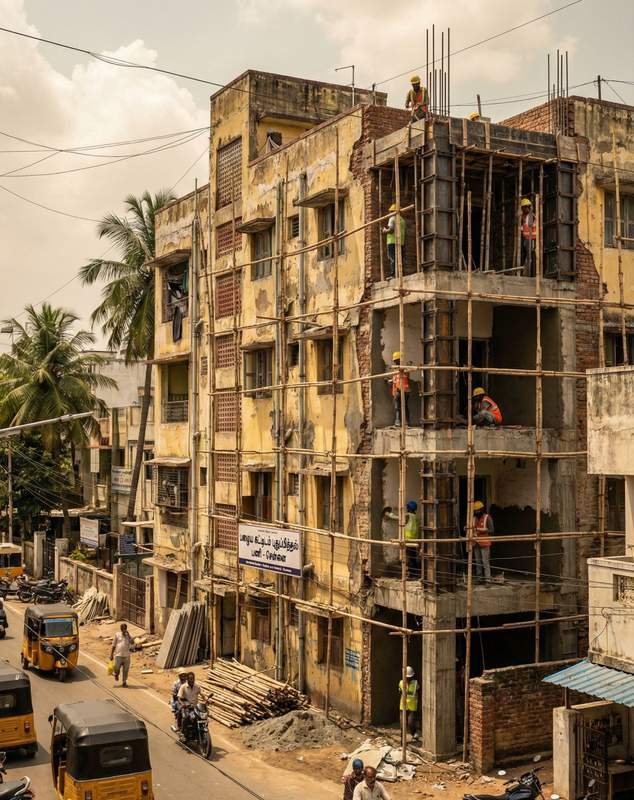
In simple terms, ‘Retrofitting’ is the process of upgrading the structural capacity of an existing building. It is fundamentally different from ‘Renovation’ or ‘Repair.’
In standard renovation work, we might change the flooring, repaint walls, or update the woodwork. While these actions improve the building’s aesthetics, they do not increase its strength. Retrofitting, on the other hand, is a scientific method focused on strengthening the “skeleton” of the building—its columns, beams, and foundation. The primary goal is to increase the building’s load-bearing capacity, whether to withstand natural disasters like earthquakes or to support the construction of additional floors.
Retrofitting Experts: Doctors for Your Building
When humans fall ill, we visit a doctor for diagnosis and treatment; buildings require the same care. This is where Retrofitting Experts come in. These are not general contractors; they are professionals with deep experience in Civil Engineering, specifically in the field of Structural Engineering.
An ordinary mason or a standard contractor cannot accurately diagnose the structural weaknesses of a building. Plastering over a crack is merely a cosmetic bandage, not a cure for the underlying disease. Retrofitting experts conduct a complete analysis to answer critical questions: Why did the crack appear? Is there soil settlement in the foundation? Have the internal steel rods rusted? They act as “Specialist Doctors” for the built environment.
When is Retrofitting Necessary?
Not every building requires retrofitting, but it becomes essential in the following scenarios:
Seismic Risk: Many older buildings were constructed before modern Seismic Codes (earthquake safety rules) were enforced. Experts are needed to strengthen these structures in earthquake-prone areas.
Change in Usage: If a residential home is converted into a school or a commercial complex, the “Live Load” (weight of people and furniture) increases significantly. If the old columns cannot support this new weight, retrofitting is required.
Construction Defects: If poor-quality materials were used during the original construction, or if proper curing wasn’t done, the building will weaken prematurely.
Vertical Expansion: If a foundation was designed for only two floors, but the owner wishes to add a third, the existing foundation and columns must be strengthened first.
The Process: How Experts Work

When retrofitting experts take on a project, they follow a meticulous, scientific procedure:
1. Condition Assessment (The Diagnosis) First, experts visit the site for a visual inspection. Beyond just looking, they employ modern technology known as Non-Destructive Testing (NDT) to test the building’s strength without damaging it.
Rebound Hammer Test: Used to check the surface strength of the concrete.
Ultrasonic Pulse Velocity (UPV): Uses sound waves to detect internal cracks and voids within the concrete.
Rebar Locator: Scans columns to determine the layout of internal steel rods and check for corrosion.
2. Analysis and Design Based on the test results, the current load-bearing capacity is calculated. The experts then design a specific technical solution to bridge the gap between the current strength and the required strength.
3. Execution This is the critical phase where the work is carried out by trained workers under the strict supervision of the experts.
Key Retrofitting Technologies
It is helpful to understand some of the common techniques experts use:
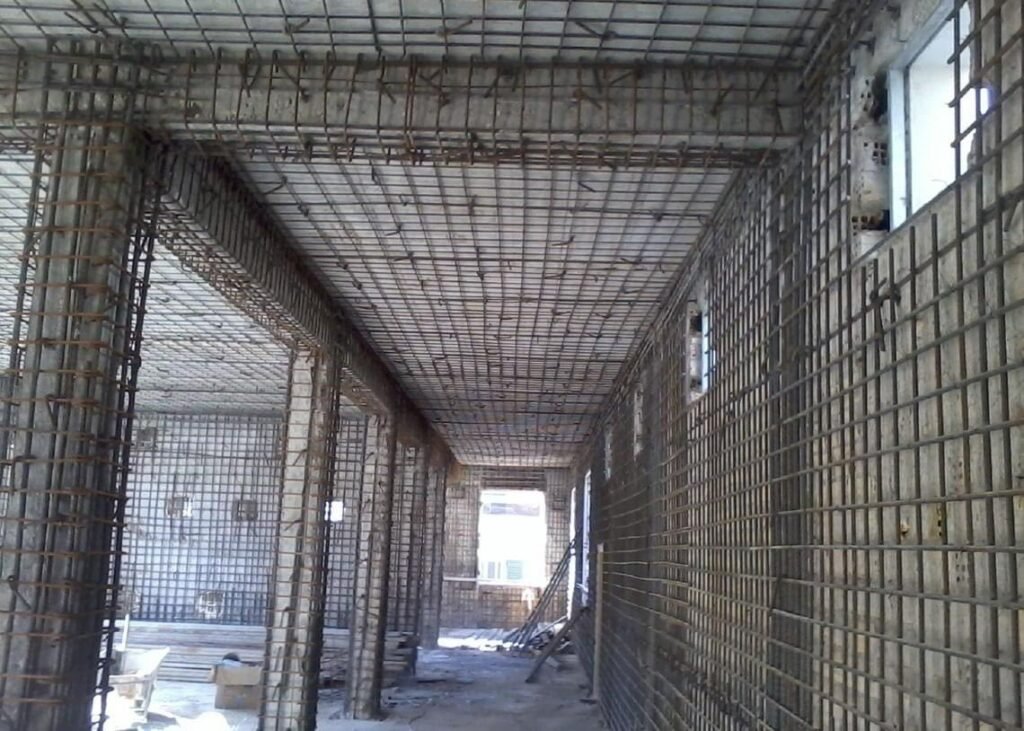
Concrete Jacketing: This is a popular method where new steel rods are tied around old columns or beams, and a new layer of concrete is poured around them. This increases the size of the column and its load-bearing capacity. Think of it as the building wearing a protective suit of armor.
Steel Jacketing: Used when there isn’t enough time for concrete curing or if increasing the column size is undesirable. Steel plates are placed at the four corners of a column and tightened to boost strength.
FRP Wrapping (Carbon Fiber): The pinnacle of modern technology. “Carbon Fiber” or “Glass Fiber” sheets—which are thin but stronger than steel—are wrapped around columns using epoxy resin. This method is lightweight, non-corrosive, and does not consume extra space.
Foundation Strengthening: If the foundation is weak, techniques like ‘Micro Piling’ or ‘Soil Stabilization’ are used to alter the soil properties and prevent the building from sinking.
The Benefits of Retrofitting
Compared to demolishing and rebuilding, retrofitting offers significant advantages:
Cost-Effective: Retrofitting typically costs only 40% to 60% of the price of constructing a new building.
Time-Saving: A new building takes years to complete, whereas strengthening work can often be finished in a few months.
Environmental Protection: Demolition creates massive amounts of debris that harm the environment. Retrofitting prevents this waste. As environmentalists argue, “The greenest building is the one that is already built.”
Heritage Preservation: For historical or traditional buildings, retrofitting is the only way to preserve their structural integrity without destroying their antique character.
The Challenges
Retrofitting experts face several hurdles. Often, old buildings lack original blueprints, making it difficult to locate foundations or beams. Furthermore, work often needs to be done while the building is occupied. Controlling dust, noise, and vibration while ensuring safety is an art form in itself. Additionally, hidden damage sometimes reveals itself only after work begins, requiring experts to possess the sharp knowledge to adapt plans instantly.
In today’s modern world, with real estate prices touching the sky, protecting our existing assets is mandatory. Do not be indifferent to small cracks in your building; they could be the first symptom of diminishing strength. Just as self-medication is dangerous for the body, temporary patchwork is dangerous for structural issues.
By approaching qualified Retrofitting Experts, conducting proper assessments, and implementing the right strengthening measures, we can give our old buildings a new lease on life. This is a smart decision that protects not only our physical safety but also our finances and the environment. Technology has advanced; demolition is no longer the only answer—strengthening and preserving is the superior solution.