Throughout our childhood, we heard stories about Buddha, who, as a prince named Siddhartha, gave up his wealth, home, and family to discover the meaning of life and become enlightened. As Buddhism spread and gained followers, various types of Buddhist architecture, such as stupas, viharas, and temples, were built. In Tamil Nadu, where we learned about Buddhism and its architectural structures in our second-year classroom, we have not come across any notable Buddhist buildings. However, there are excavated Buddhist temples in the region, and their foundations are being preserved.
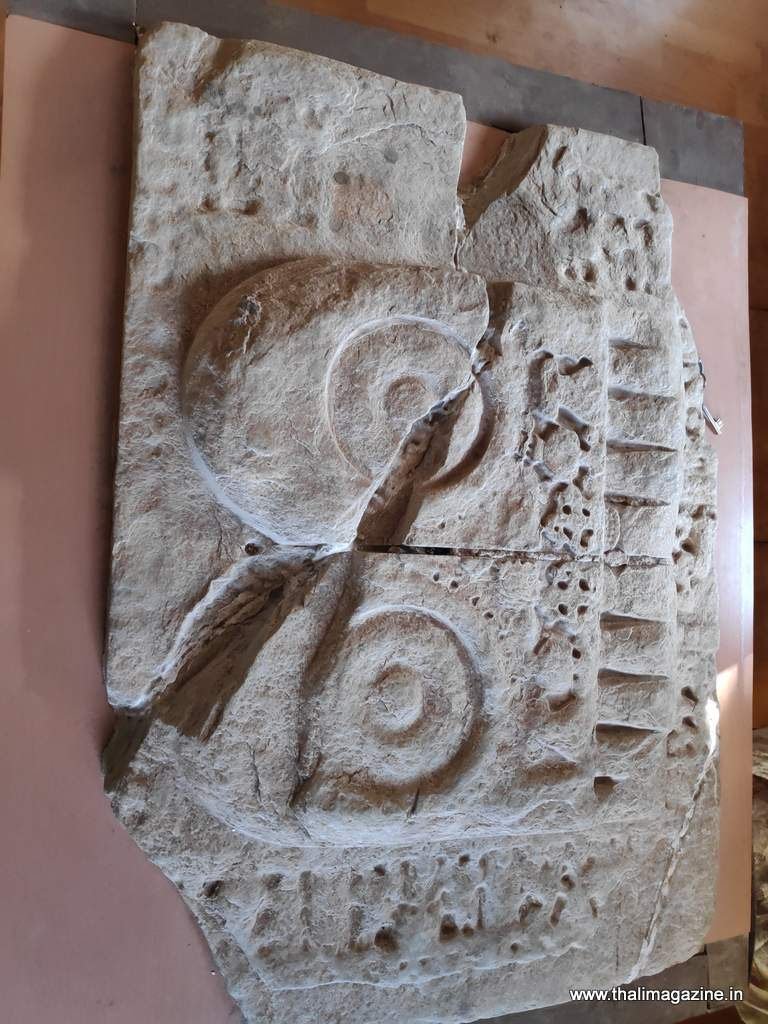
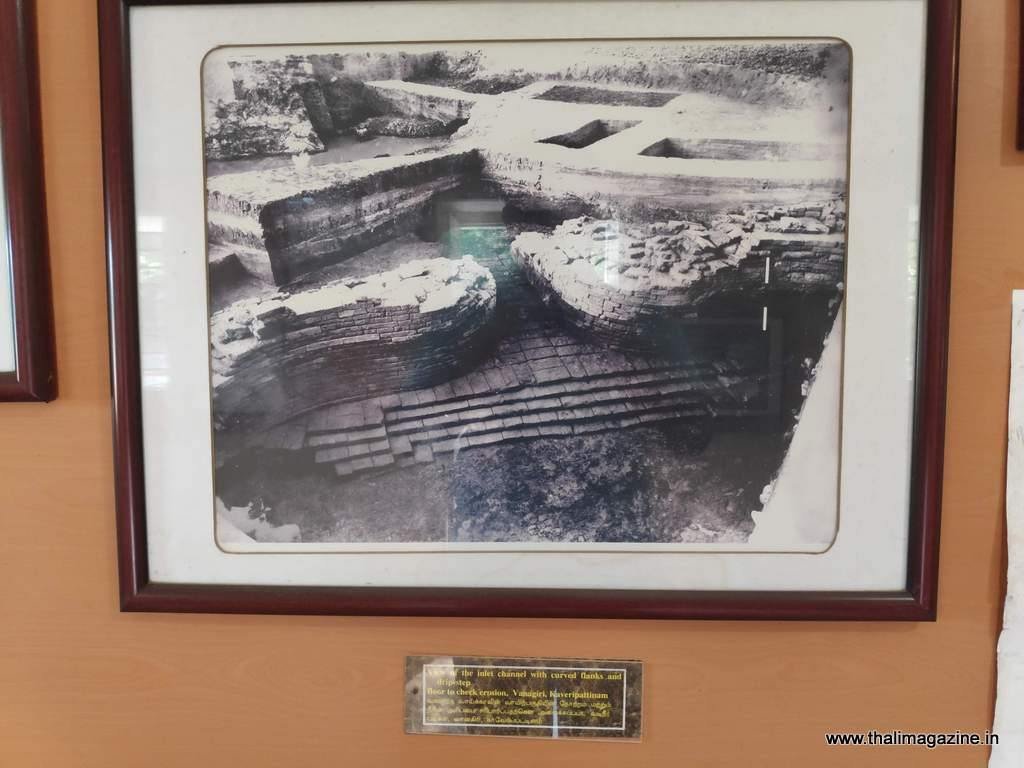
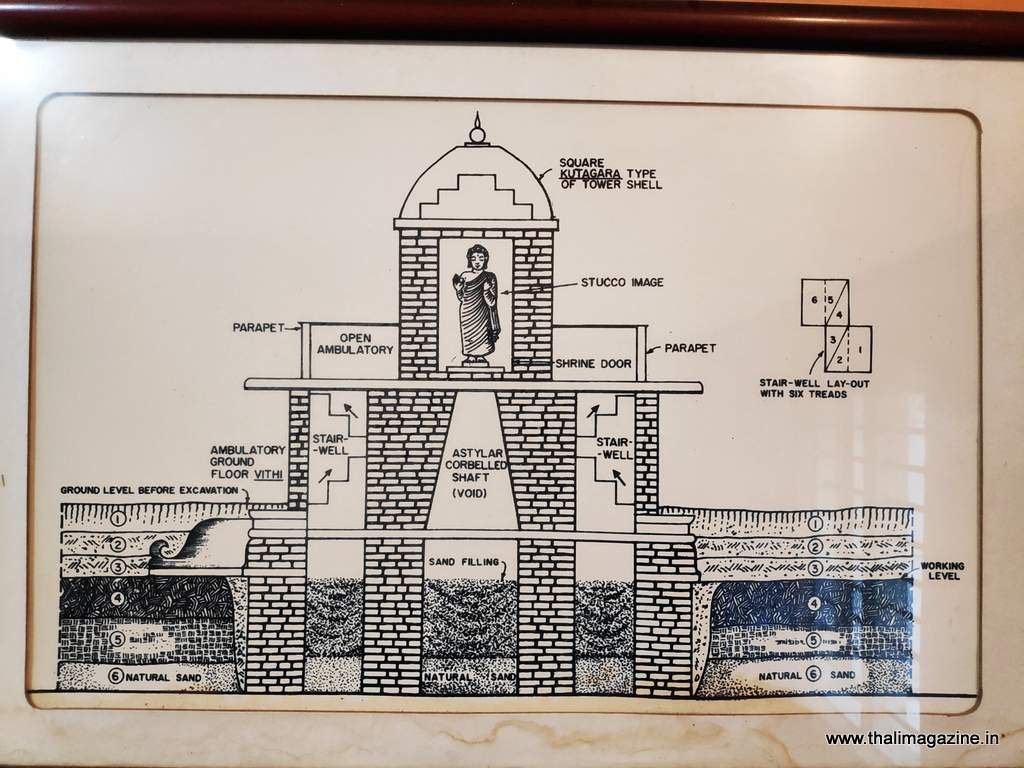
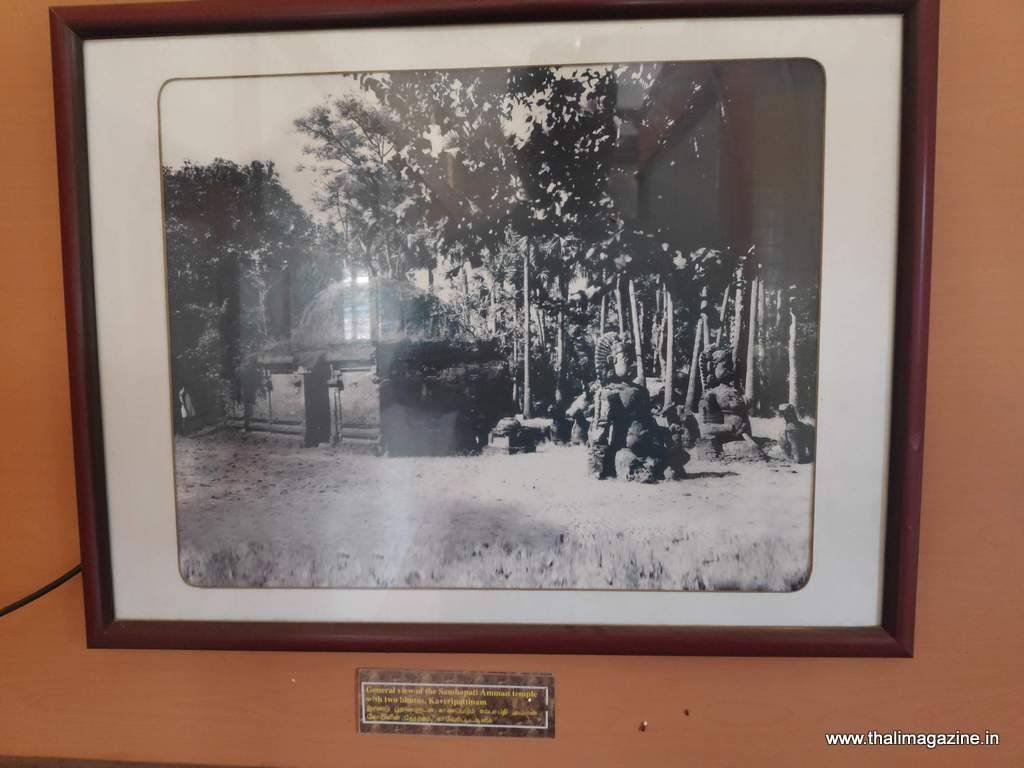
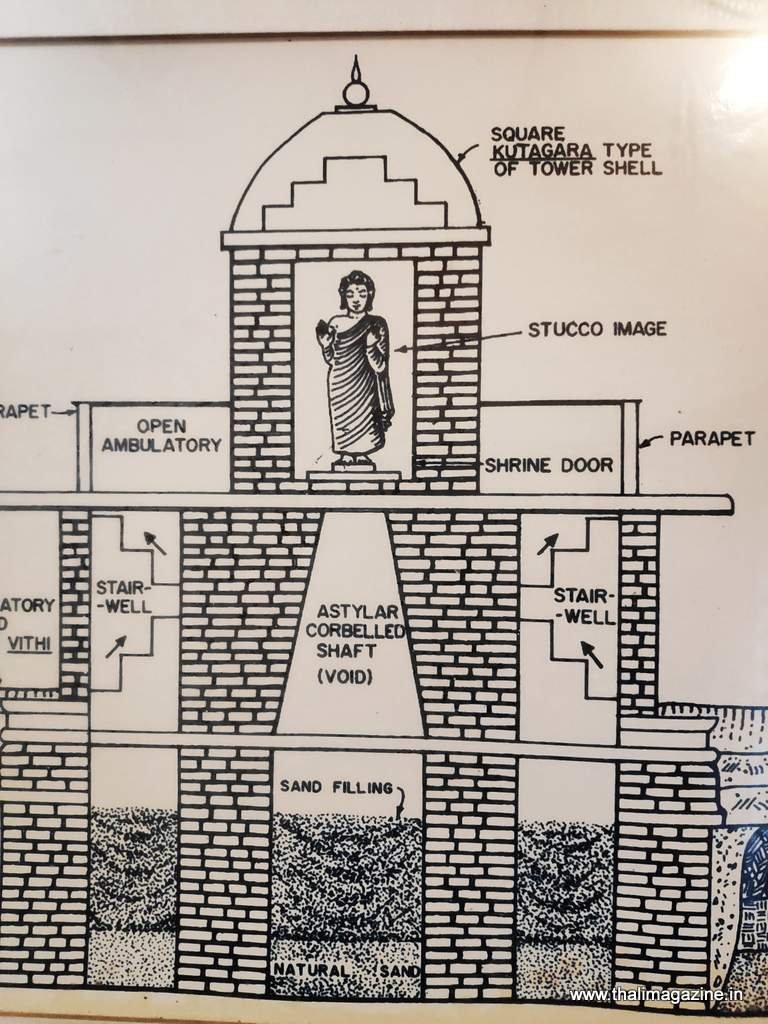
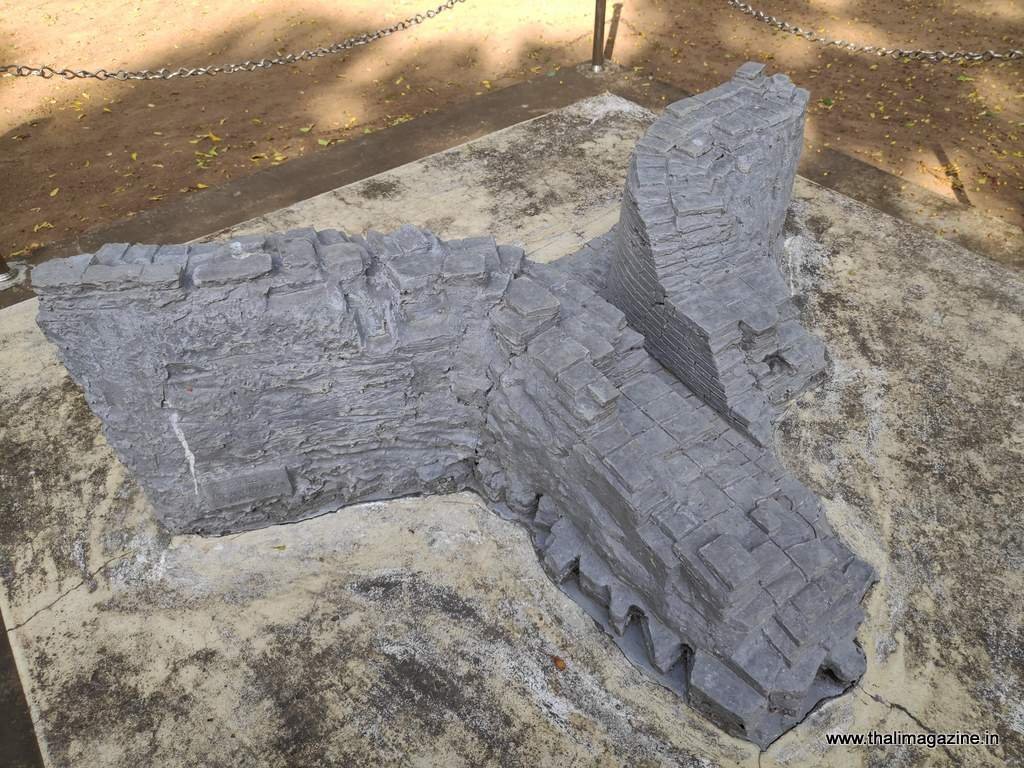
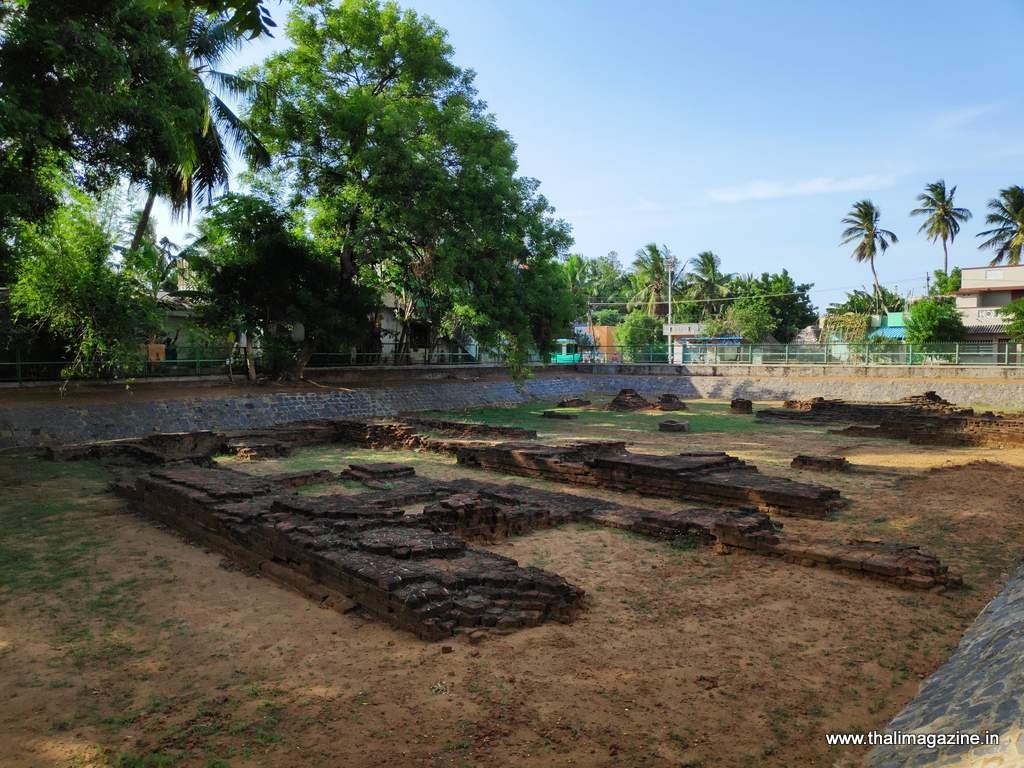
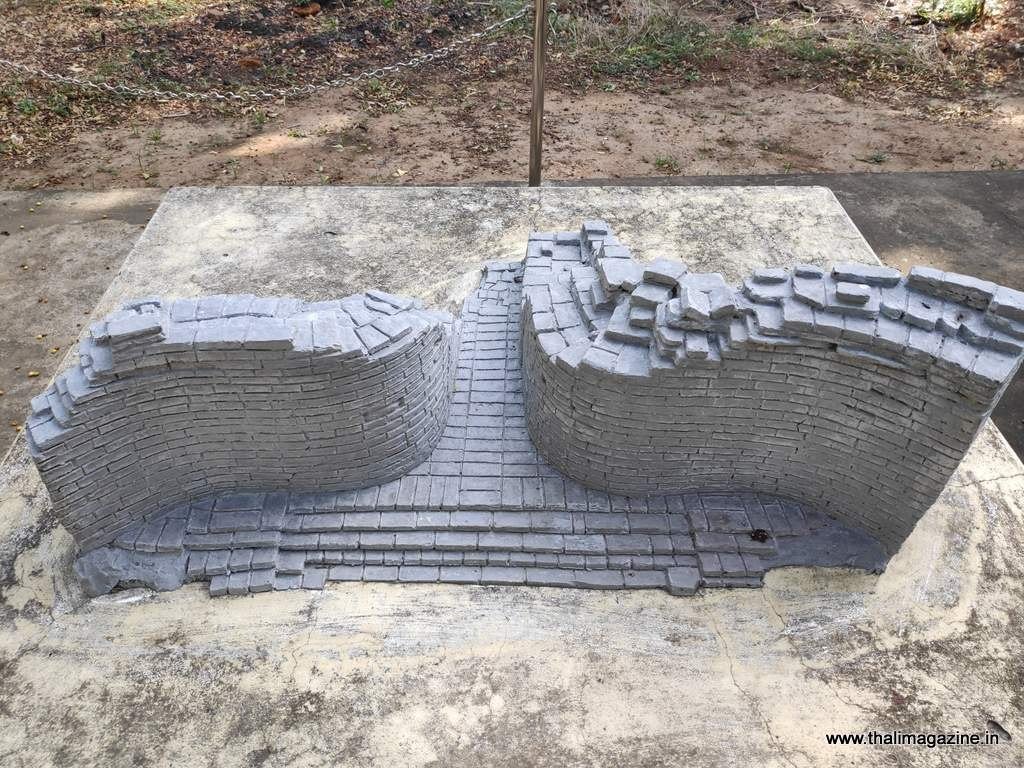
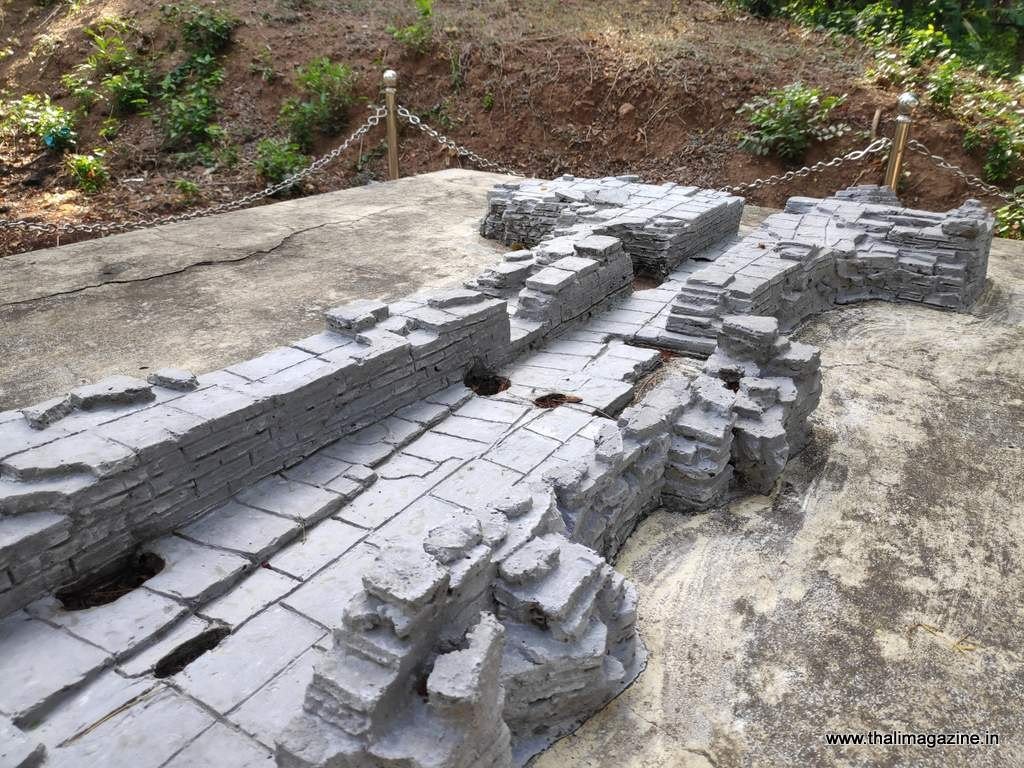
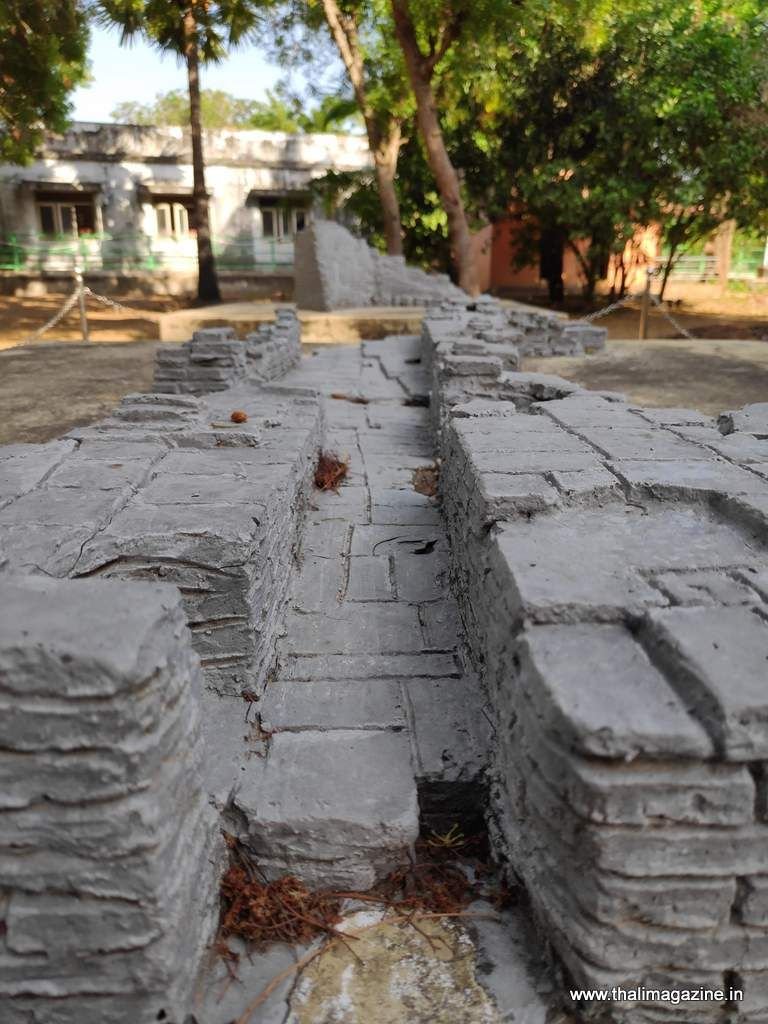
Kaviripumpattinam was a bustling port city from the 1st to the 3rd century AD, and it attracted traders and merchants from around the world. The literature describes flags of various countries fluttering in the breeze and a tall lighthouse that guided ships to the harbor. There was also a settlement for foreign traders called the Yavanar Seat. An inscription reveals that the Chinese king requested Narasimha Varman to build a tower, which came to be known as “Vela Gopuram, Pudu Vela Gopuram.” The tower had five floors and was constructed from brick, with a Buddha statue found inside it. However, it was eventually demolished in 1882.
Sulamani Buddha Viharai, built by Sri Vijaya Sulamani Varman of the Shailendra clan with the help of Rajaraja Chola, is another notable Buddhist temple in Nagapattinam. Kulothungan I also gifted lands to Sulamani Viharam. The excavations carried out in 1926 and 1934 yielded 350 bronze Buddha statues, along with artifacts from Indonesia. Buddhism also features in the Manimekalai, Silapathikaram, Mahavamsa, and Buddhavamsa Saptakatha texts, all of which make reference to Kaviripoompattinam.
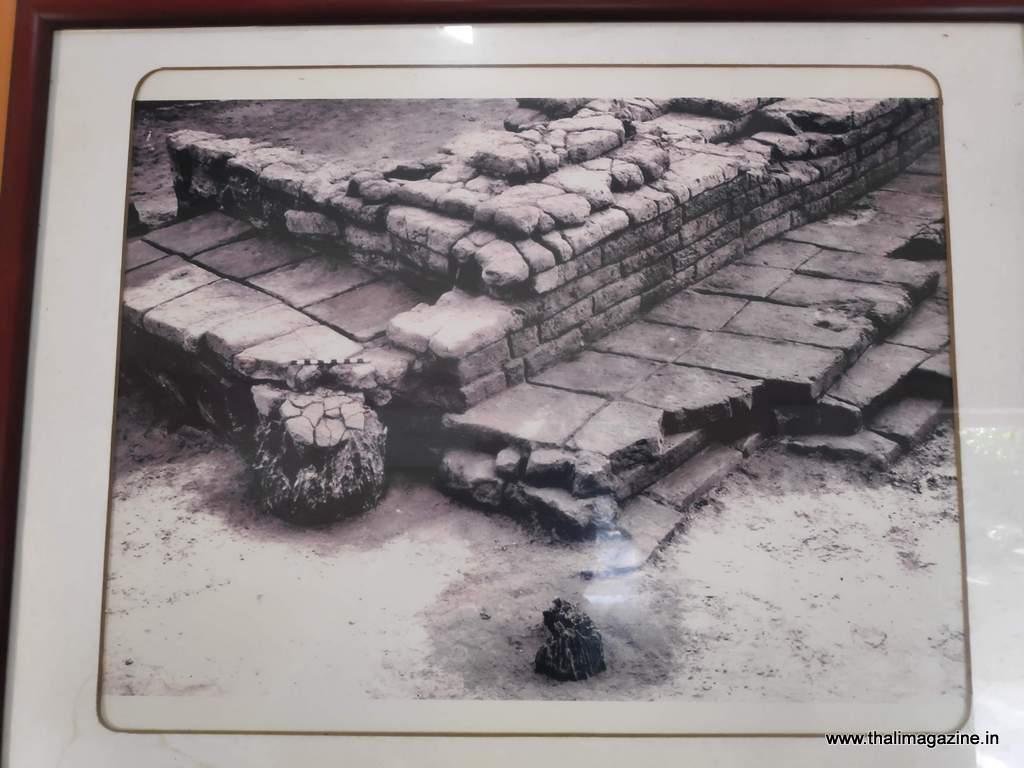
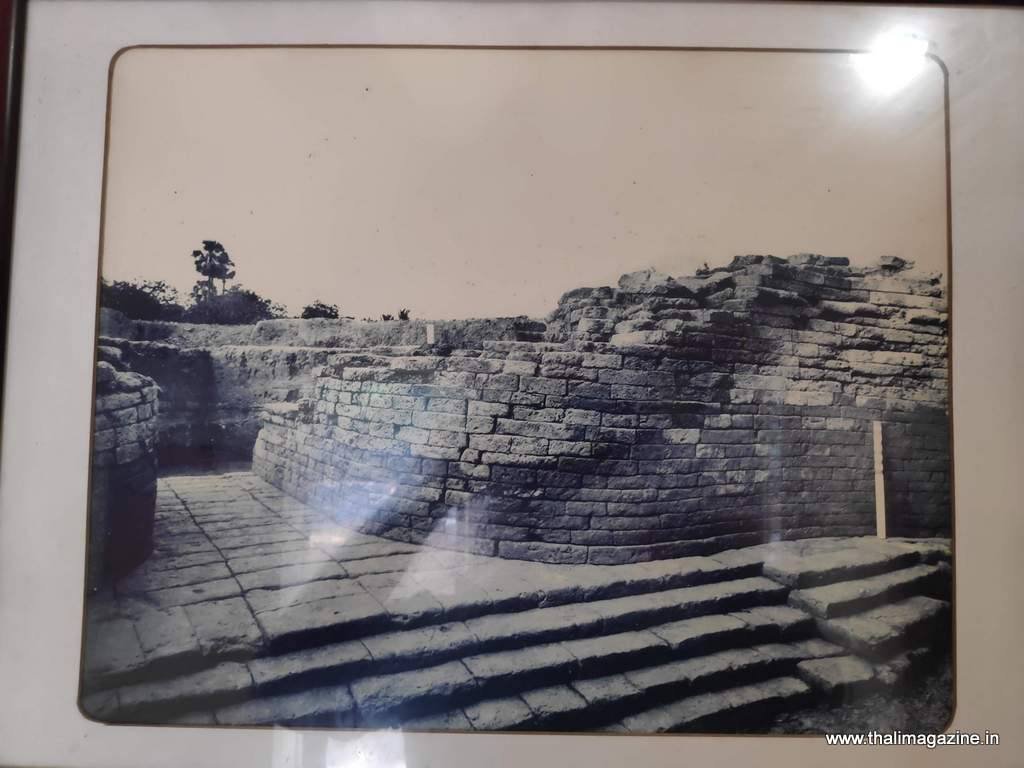
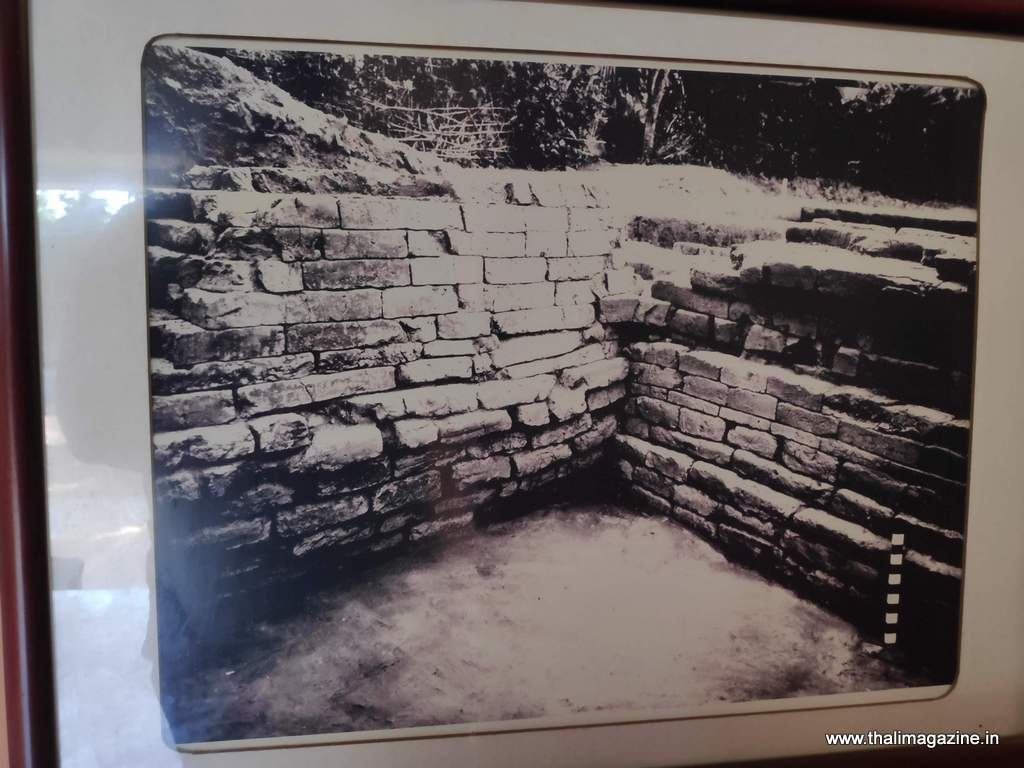
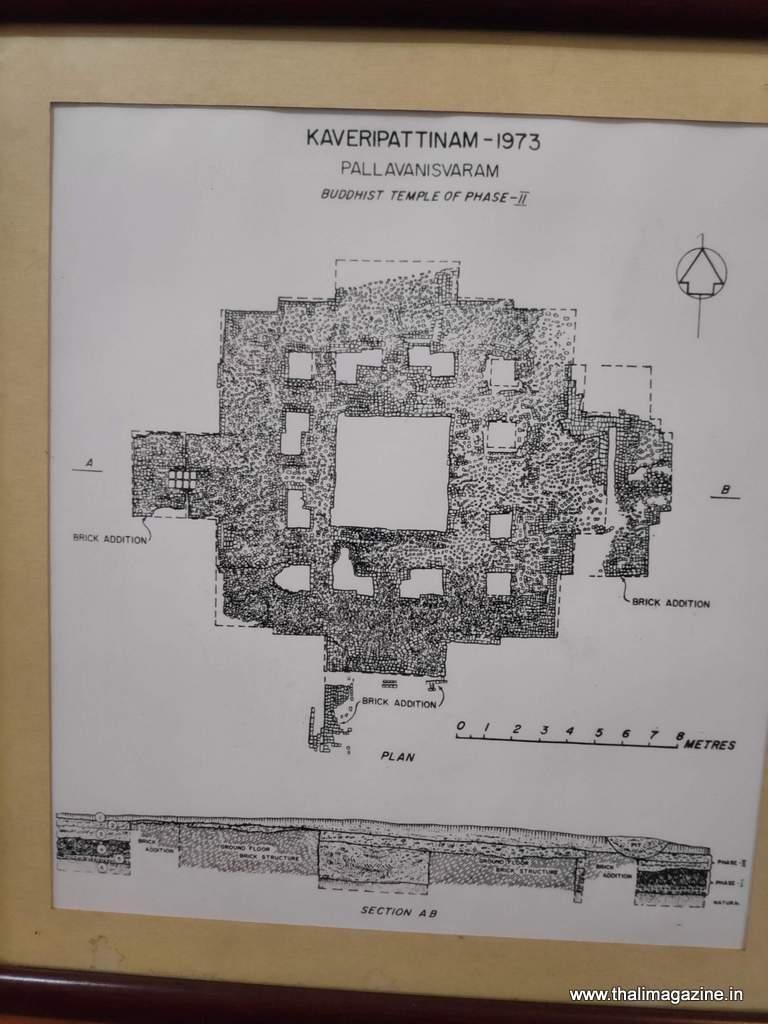
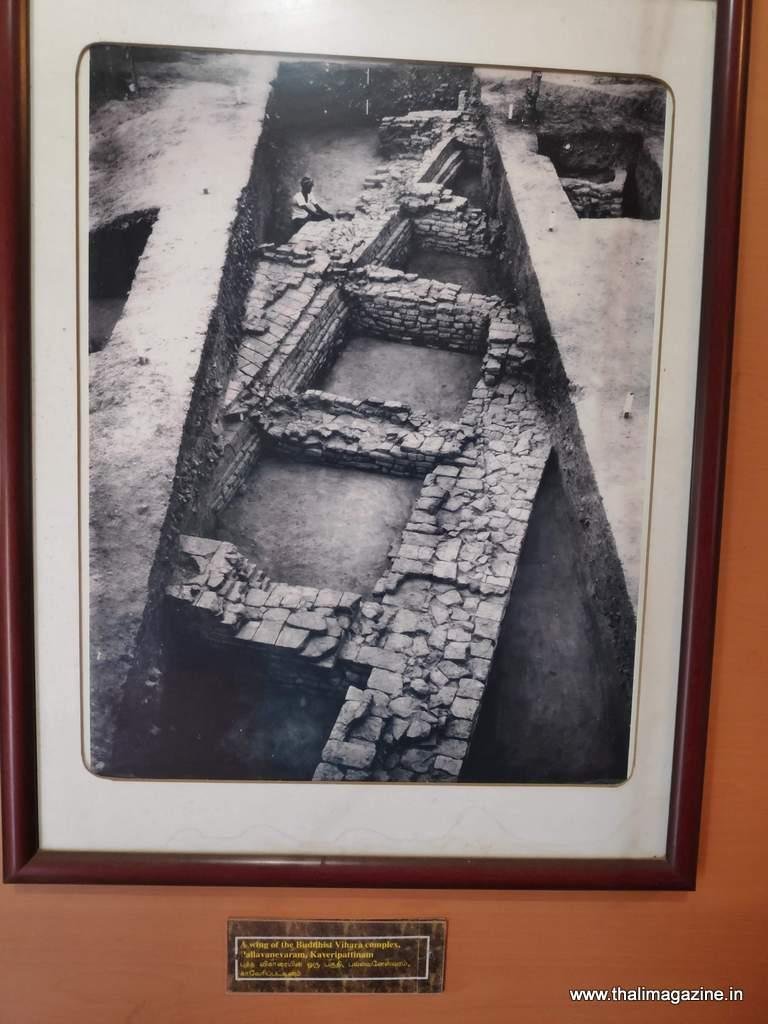
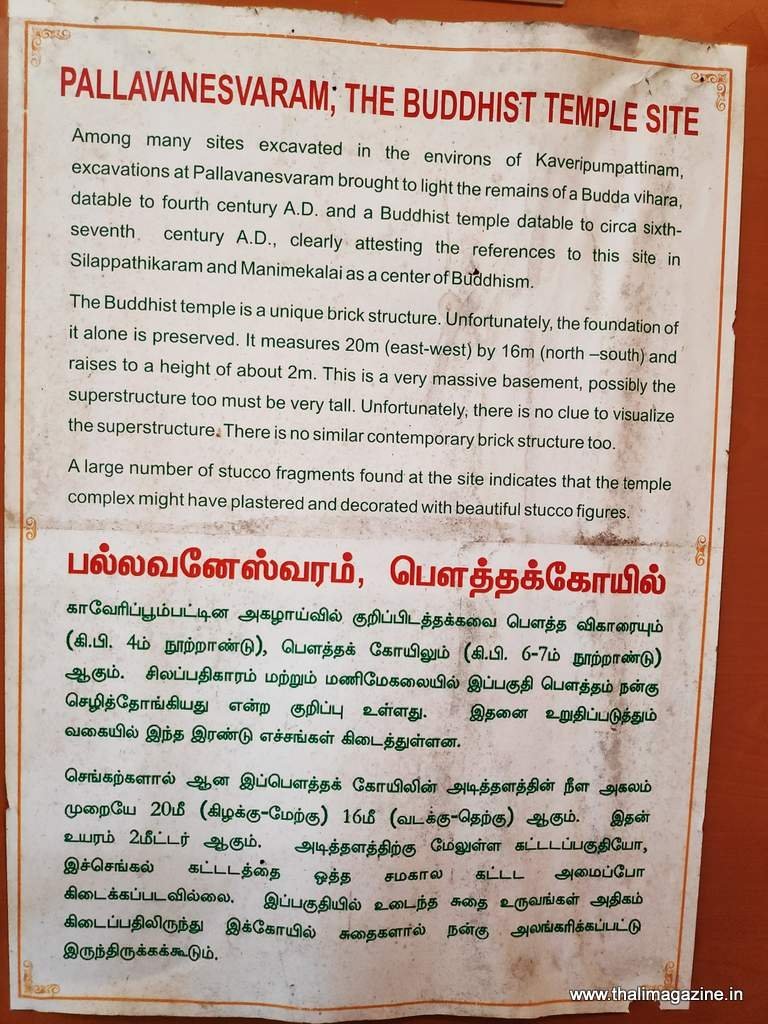
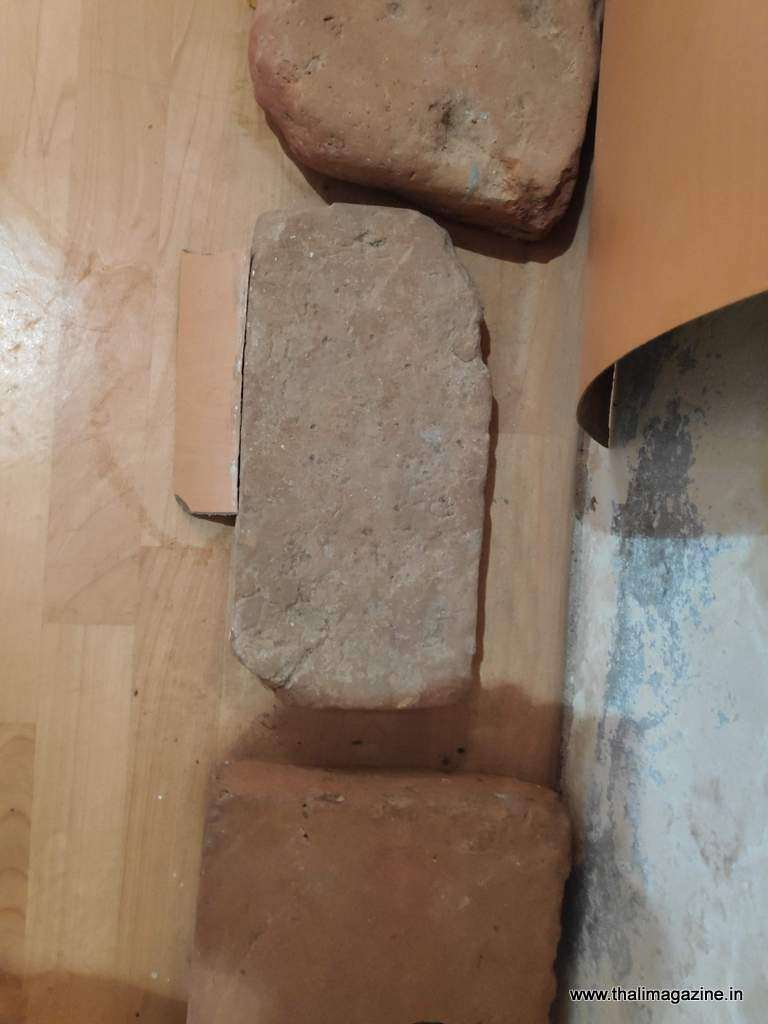
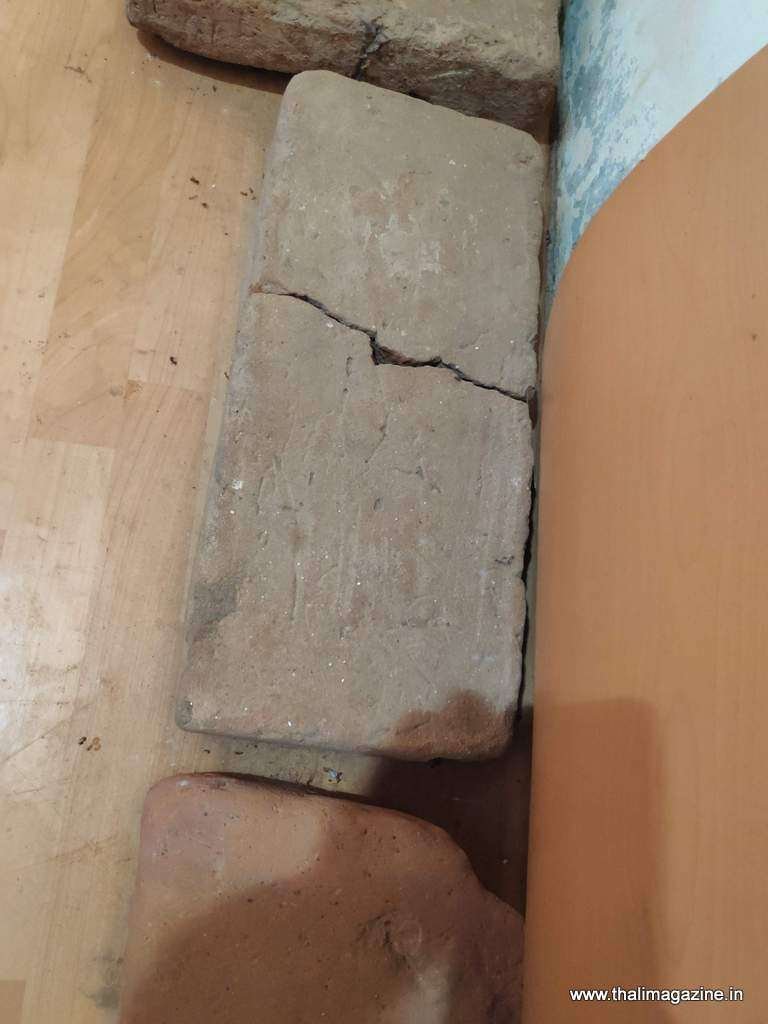
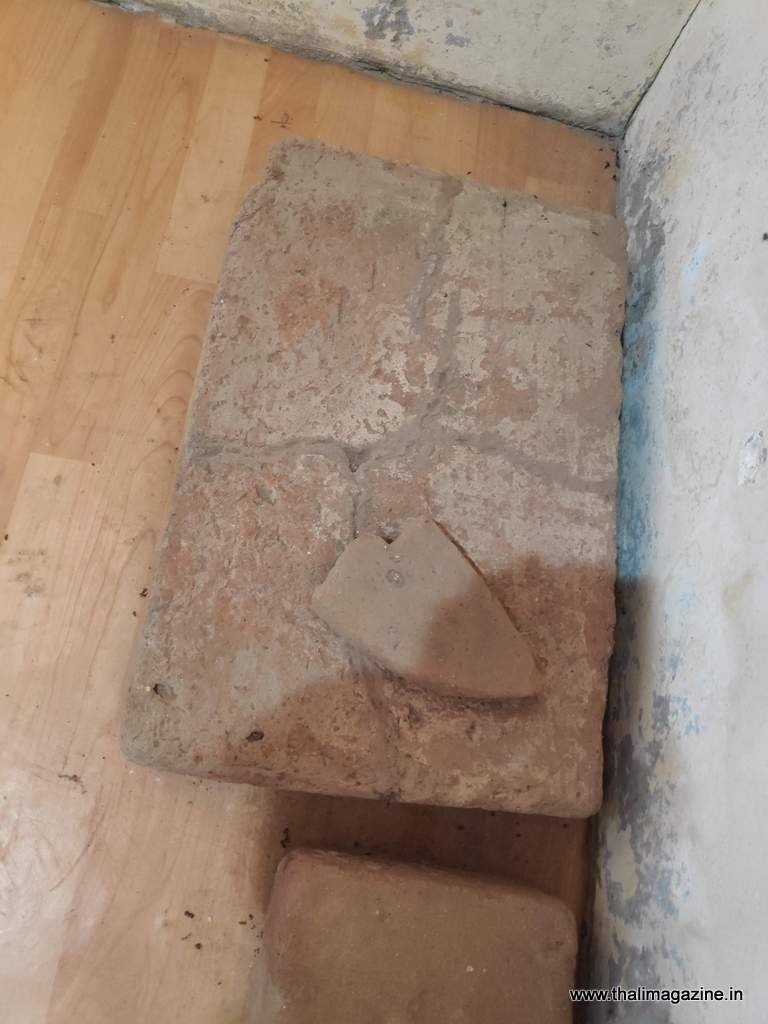
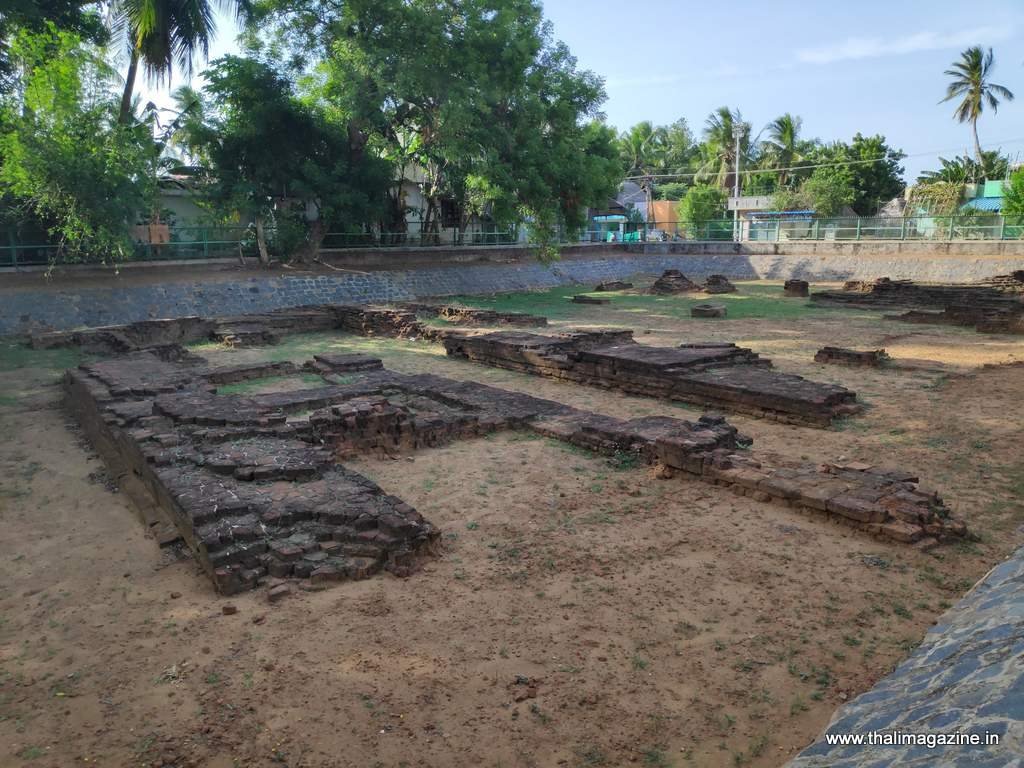
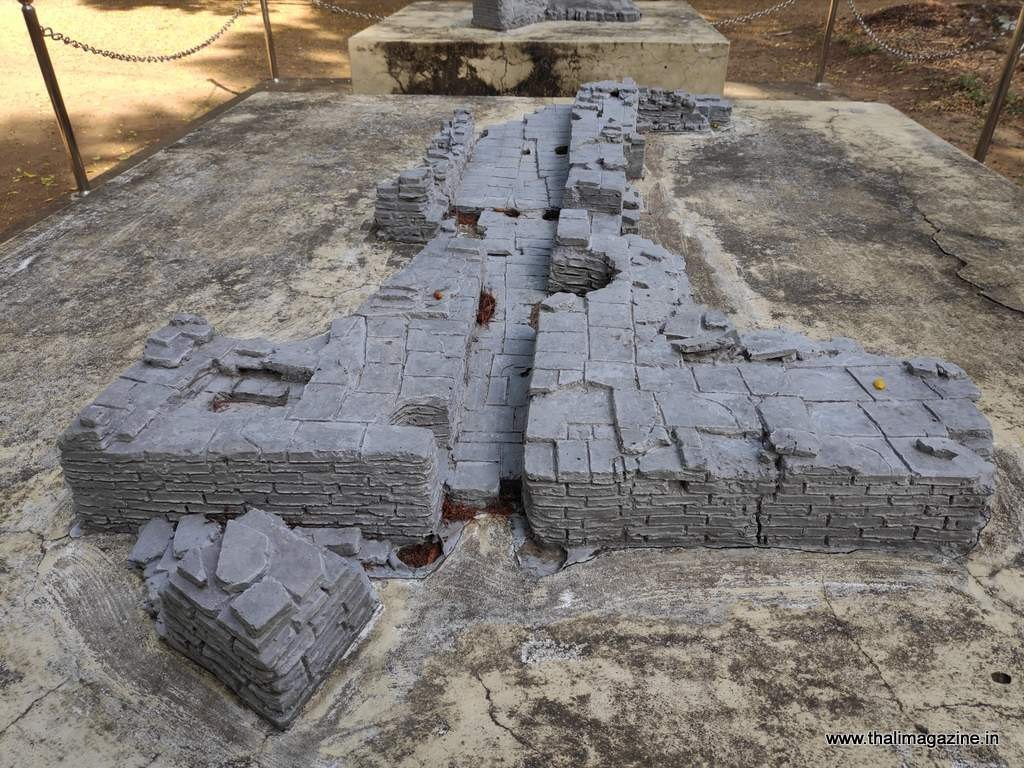
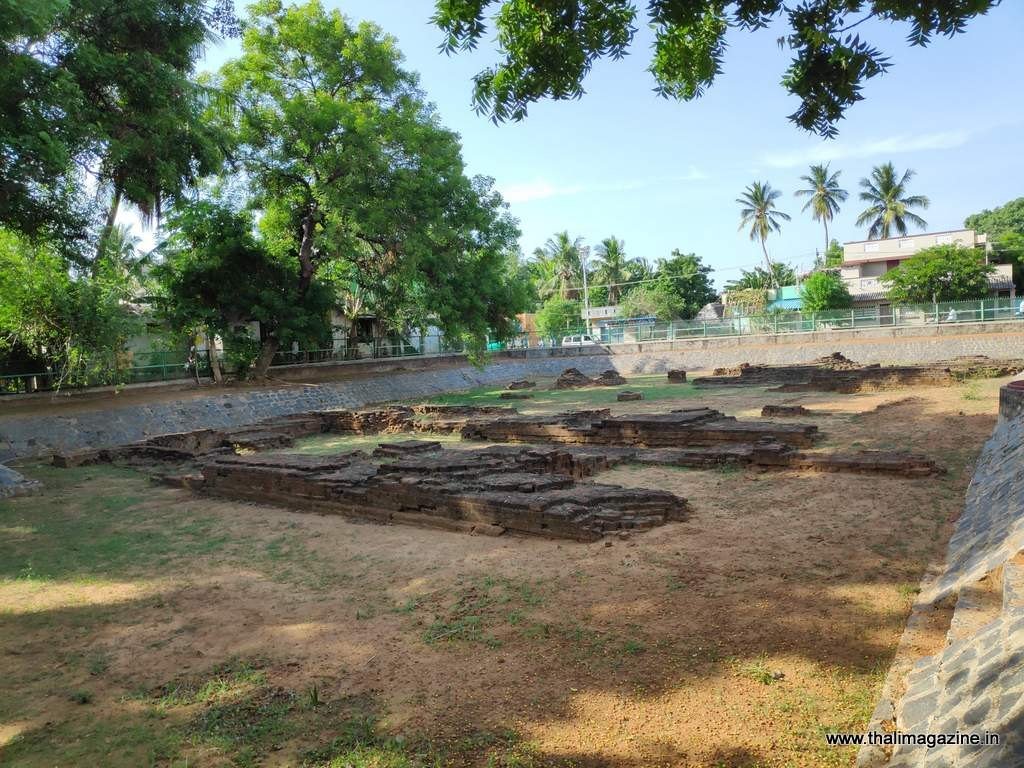
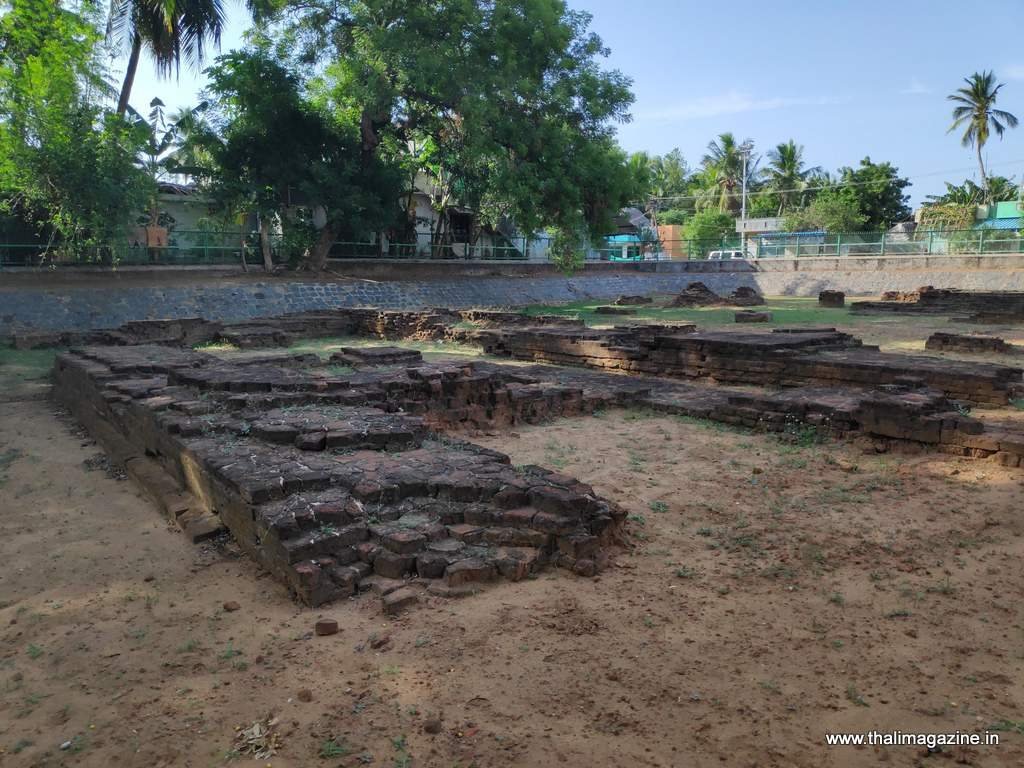
The Pallavaneswaram excavation site has unearthed a Buddhist shrine and temple believed to date back to the 4th or 5th century. The excavation has only revealed the foundation of the building, along with some stone objects and clay figurines. Further excavations have revealed that the Buddhist temple consisted of nine rooms, with a common hall to the south and chambers on either side, all constructed entirely of brick measuring 42 x 24 x 10 cm. Among the discoveries are a copper Buddha statue and various clay idols. Nearby, a limestone Buddha statue dating from the 3rd or 4th century was also found.
Adjacent to the vihara lies the chaityam or temple, which is well-preserved and has a square structure with five sides and rooms extending on a brick foundation. The building is thought to be a single-story structure, with the possibility that only the pillars were made of stone and the rest was brick. The walls may have been decorated with colorful paintings, as evidenced by fragments of colors discovered during the excavation. However, it is unclear how many floors the building had, as the excavation did not reveal this information.
In conclusion, while we may not have encountered any significant Buddhist structures in Tamil Nadu, the region has a rich history of Buddhism, with excavations revealing valuable insights into the religion’s past.